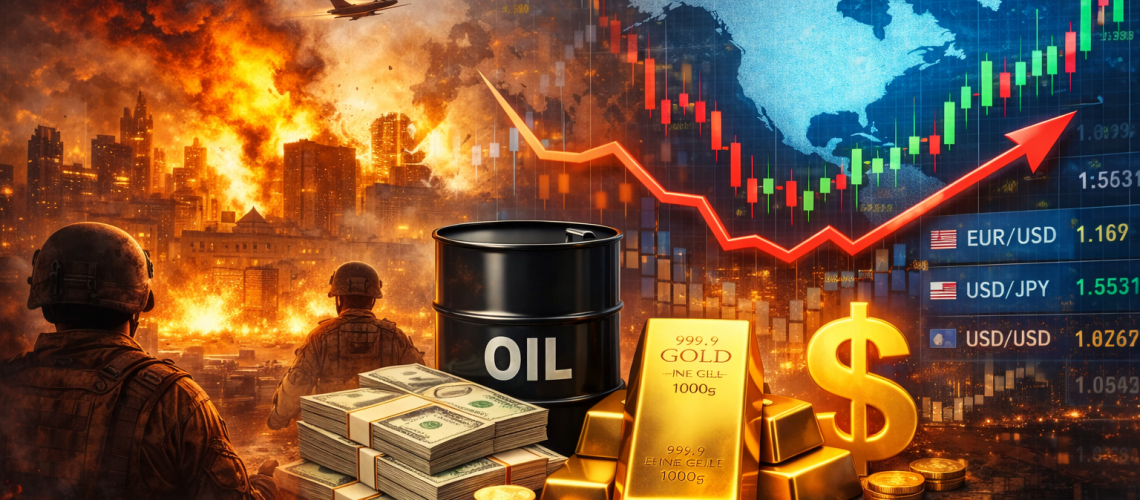
Geopolitical tensions in the Middle East have always had a strong impact on global financial markets. When conflict escalates in this region, the effects are rarely local. Because the Middle East plays a major role in global energy supply and trade routes, instability quickly spreads into oil prices, inflation, stock markets, and currencies worldwide.
Here is a clear and simple breakdown of how this happens 👇
🛢️ 1. Oil Prices and Energy Shock
The Middle East includes major oil producers and key transport routes such as the Strait of Hormuz. Countries within OPEC control a large share of global oil supply.
When war risks increase:
- Oil supply fears push prices higher
- Energy costs rise globally
- Transportation and manufacturing become more expensive
Higher oil prices often lead to higher inflation in the US, Europe, and Asia. This puts pressure on central banks like the Federal Reserve and the European Central Bank to keep interest rates elevated for longer.
📈 2. Stock Market Volatility
Wars increase uncertainty, and markets do not like uncertainty.
Typical reactions include:
- Short term stock market drops
- Increased volatility
- Investors moving money into safer assets
Defense and energy stocks sometimes rise, while airline, tourism, and growth stocks may struggle due to higher fuel costs and weaker consumer confidence.
💰 3. Safe Haven Assets Surge
During geopolitical tensions, investors often move capital into so called safe haven assets.
Common safe havens:
- Gold
- US Dollar
- Government bonds
Gold prices often rise as investors look for protection. The US dollar may strengthen because global investors see it as a stable reserve currency during uncertainty.
🌐 4. Trade and Supply Chain Disruptions
The Middle East is also critical for global shipping lanes. If conflict threatens key routes:
- Shipping costs increase
- Delivery times become longer
- Global trade slows
Higher shipping costs feed into inflation and reduce corporate profit margins.
📉 5. Inflation and Interest Rates
One of the biggest economic consequences of war in the Middle East is inflation pressure driven by energy prices.
If oil remains high:
- Consumer prices rise
- Central banks delay rate cuts
- Borrowing costs stay high
This slows economic growth and may increase recession risks in vulnerable economies.
🏦 6. Currency Market Impact
Currencies react quickly to geopolitical risk.
- Oil exporting countries may benefit from higher energy prices
- Emerging markets can suffer from capital outflows
- The US dollar often strengthens during global stress
Forex markets typically see sharp moves during major headlines related to conflict escalation.
🔎 Overall Global Economic Impact
The long term impact depends on:
- How long the conflict lasts
- Whether oil supply is directly disrupted
- How major global powers respond
Short conflicts may create temporary market volatility. Prolonged wars with supply disruption can trigger inflation waves, slow global growth, and increase financial instability.
📊 Key Takeaways
✅ Higher oil prices can fuel global inflation
✅ Stock markets become more volatile
✅ Gold and the US dollar often strengthen
✅ Central banks may delay rate cuts
✅ Global trade and supply chains may suffer
War in the Middle East does not stay regional. It affects energy markets, financial markets, and economic policy decisions worldwide.