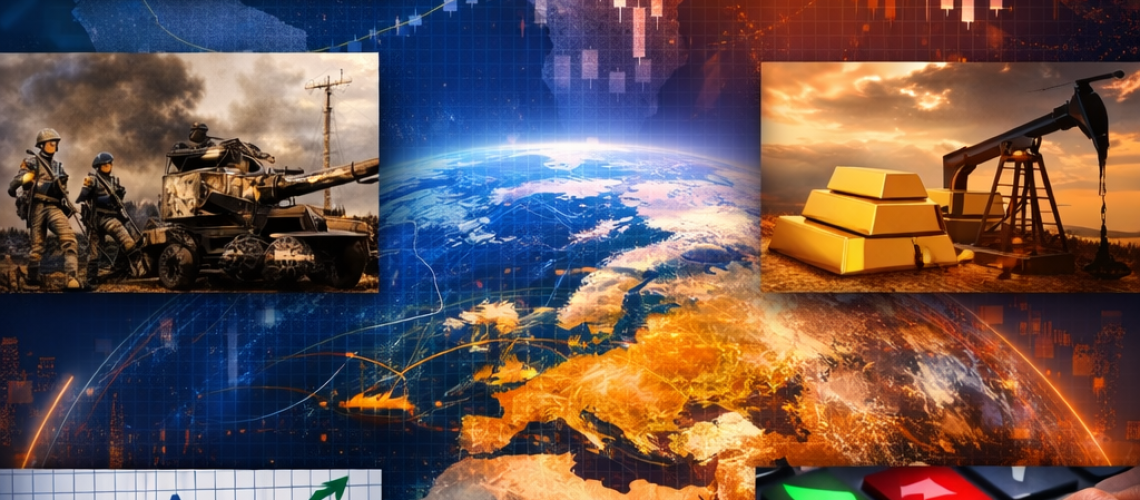
What’s happening around the world has a powerful impact on the global financial markets. Political decisions, economic data, and international conflicts can move prices within seconds. For traders, understanding these global forces is essential to manage risk and spot opportunities 📊
🏦 Central Banks & Interest Rate Decisions
Central banks play a key role in market movements. When interest rates rise, currencies usually become stronger. When rates are cut, they often weaken. Inflation reports, employment data, and speeches from policymakers can trigger sharp price moves 🔔
🌐 Geopolitical Tensions & Global Conflicts
Wars, political instability, and international tensions increase uncertainty. During these periods, investors often move money into safer assets, while riskier markets can experience higher volatility ⚠️
📈 Economic Data & Growth Outlook
Key reports such as GDP, inflation, and job numbers show how strong or weak an economy is. Strong data usually boosts confidence, while weak data can push markets lower 📉
🛢️ Commodities & Global Demand
Oil, gold, and other commodities influence global markets. Rising energy prices can increase inflation, while falling demand may signal slowing economic growth. These shifts affect currencies, stocks, and indices worldwide 💰
📊 Market Sentiment & Investor Behavior
Markets are driven not only by data, but also by emotion. When confidence is high, traders take more risk. When fear rises, markets can quickly turn defensive. Understanding sentiment helps traders stay one step ahead 🔄
✅ Final Thoughts
Global events shape the markets every day. Staying informed, following major news, and understanding how world events affect price movement can help traders make smarter decisions and reduce unnecessary risk 🚀