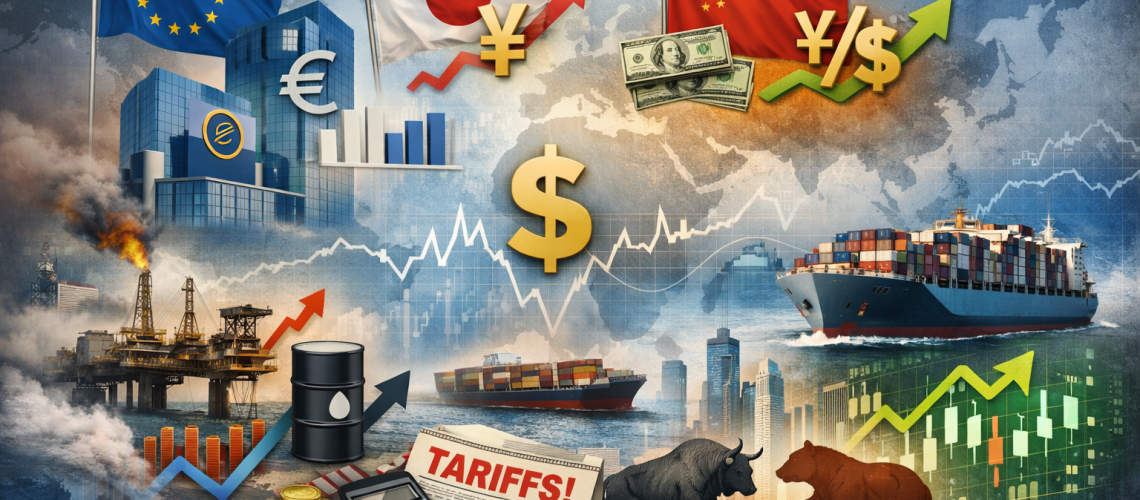
Quick snapshot ✅
Today’s global economic story is a mix of:
- Central banks staying cautious (especially in Europe) 🏦
- Currencies reacting to politics and policy expectations (Japan and China in focus) 💱
- Oil supported by geopolitical risk (shipping and supply worries) 🛢️
- Investors rotating across regions (Europe, Hong Kong, and emerging markets have started 2026 strong) 📊
1) Europe: inflation looks “on track”, but uncertainty stays high 🇪🇺🧊
Officials at the European Central Bank are signaling that inflation is expected to stabilize around the 2% goal over the medium term, even if it temporarily dips below that level in 2026. Christine Lagarde also emphasized a data-driven, meeting-by-meeting approach.
A key takeaway: the ECB wants flexibility. It’s not committing to a fixed path, and it’s watching whether inflation weakness is temporary (for example energy-driven) or broader.
Why it matters
If markets believe inflation is contained, rate cuts become more plausible later. But if growth holds up and inflation expectations stay anchored, the ECB can afford to wait.
2) Trade shock risk: tariffs can cool inflation but also slow growth 📦⚠️
A new ECB analysis highlights a classic trade-off: foreign import tariffs tend to weaken euro-area activity and push inflation lower, even as they hit certain export-exposed sectors harder. The ECB notes monetary policy can help offset some of that drag depending on how the shock spreads.
Why it matters
Tariff headlines can quickly shift expectations for:
- company earnings (especially exporters)
- inflation (often lower in the euro area in this model)
- the timing of rate changes
3) Japan: politics moved the yen and rate expectations 🇯🇵💱
The Japanese yen strengthened after Sanae Takaichi’s election victory, with markets interpreting her mandate as increasing the chance of policy shifts that could affect inflation and rates.
Why it matters
Currency moves change the global picture fast:
- A stronger yen can tighten financial conditions for exporters
- It can also influence global FX positioning vs the dollar
4) China: yuan strength and “Treasuries exposure” headlines 🇨🇳💵
Today’s market chatter also includes renewed focus on Chinese institutions’ exposure to U.S. Treasury and what that implies for capital flows and the dollar. The Chinese yuan has been stronger, and investors are watching policy signals closely.
Why it matters
Even small shifts in expectations around reserve assets and flows can ripple into:
- USD direction
- global bond yields
- risk appetite in emerging markets
5) Oil: supply-risk premium is back 🛢️🌊
Oil prices are getting support from tensions involving Strait of Hormuz, a route critical for global crude flows. The U.S. Maritime Administration issued guidance to shipping that kept traders alert to disruption risk.
At the same time, a Reuters survey showed OPEC output fell in January, adding another layer to supply discussions (even though the broader market can still be oversupplied depending on demand and non-OPEC supply).
Why it matters
Higher oil can:
- push inflation up again (fuel, transport)
- pressure consumer spending
- complicate central bank timing
6) Markets: early-2026 leadership is not just the U.S. 📈🌍
A notable theme today: non-U.S. equity performance has been strong in parts of Europe, Hong Kong, and emerging markets compared with major U.S. benchmarks so far in 2026 (in dollar terms).
Why it matters
If this continues, it can reshape:
- portfolio allocation (more international exposure)
- currency trends (less USD concentration)
- sector leadership globally
What to watch next (simple checklist) 👀✅
- U.S. inflation and jobs releases: timing and surprises can reset global rate expectations.
- ECB messaging: confirmation that inflation expectations remain anchored near target.
- Oil and shipping headlines: any escalation or de-escalation around Hormuz can move energy fast.
- FX volatility: yen and yuan moves can spill into broader dollar positioning.