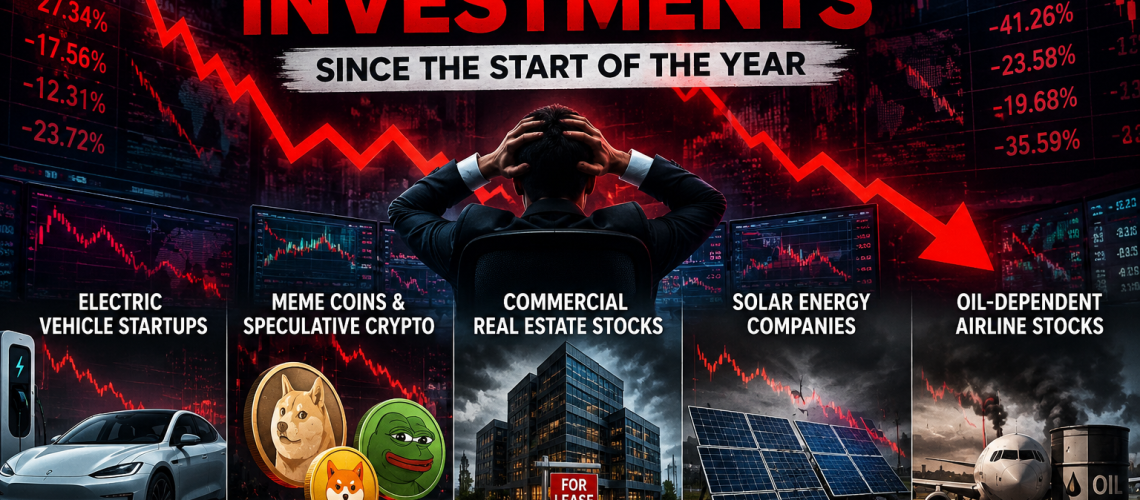
The financial markets have been full of surprises this year. While some sectors exploded higher thanks to AI hype and strong earnings, others suffered heavy losses and left investors frustrated 😬
From risky crypto tokens to struggling clean energy stocks, several investments turned into major disappointments. Here are five of the worst-performing market investments so far this year – and what traders can learn from them.
🚗 1. Electric Vehicle Startups
Many electric vehicle startups faced a brutal year in the stock market. Companies that once benefited from huge growth expectations are now struggling with slowing demand, rising competition, and high production costs.
Big problems include:
- Weak consumer spending
- Expensive financing due to high interest rates
- Price wars between EV manufacturers
- Slower global EV adoption than expected
Several smaller EV companies saw their stock prices collapse as investors moved toward safer and more profitable businesses.
📌 Why It Happened
Investors realized that many EV startups were burning cash too quickly without generating stable profits. In uncertain markets, Wall Street usually punishes companies with weak balance sheets.
2. Meme Coins and Speculative Crypto Tokens
Not all cryptocurrencies performed well this year. While major coins remained relatively strong, many meme coins and low-quality crypto projects crashed hard 🚨
Some speculative tokens lost huge portions of their value because:
- Trading hype faded
- Retail investor interest slowed
- Crypto regulation fears increased
- Liquidity dried up quickly
📌 Important Lesson
When an investment rises mainly because of internet hype instead of real utility, volatility becomes extremely dangerous.
🏢 3. Commercial Real Estate Stocks
Commercial real estate has been under pressure for a long time, and this year continued the trend.
Office buildings in many cities still struggle with:
- Remote work trends
- Lower occupancy rates
- High interest rates
- Refinancing risks
Real estate investment trusts (REITs) focused on office properties were among the weakest performers in the market.
📌 What Investors Fear
Higher borrowing costs make it harder for property companies to refinance debt, especially when property values are falling.
☀️ 4. Solar Energy Companies
Clean energy was expected to shine, but many solar companies disappointed investors this year 🌧️
Several solar stocks dropped sharply because of:
- Weak consumer demand
- Higher installation costs
- Expensive financing
- Supply chain issues
- Reduced government support in some regions
📌 Market Reality
Even industries with strong long-term potential can suffer during difficult economic conditions.
🛢️ 5. Oil-Dependent Airline Stocks
Airline companies faced pressure from rising fuel costs and uncertain global demand.
When oil prices climb, airline profits usually get squeezed because fuel is one of their largest expenses ✈️
Other problems included:
- Economic slowdown fears
- Geopolitical tensions
- Travel demand uncertainty
- Currency fluctuations
Some airline stocks struggled to maintain investor confidence despite strong travel activity earlier in the year.
📊 What Traders and Investors Can Learn
The biggest market losers this year reveal several important lessons:
✅ Avoid investing only because of hype
✅ High debt becomes dangerous during high interest rates
✅ Profitability matters more in uncertain markets
✅ Diversification helps reduce risk
✅ Long-term trends do not guarantee short-term gains
Markets constantly rotate between winners and losers. Smart investors focus on risk management instead of chasing excitement.
🔮 What Could Happen Next?
Some of these sectors could recover later if:
- Interest rates begin falling
- Economic growth improves
- Investor confidence returns
- Energy prices stabilize
However, weak companies may continue struggling if financial conditions stay tight.
For traders, this means staying selective and avoiding emotional investing during volatile periods.
📈 Final Thoughts
This year reminded investors that markets can change direction very quickly. Sectors that looked unstoppable only months ago suddenly became some of the worst investments in the market.
Understanding why these investments failed can help traders make smarter decisions and avoid costly mistakes in the future 💡